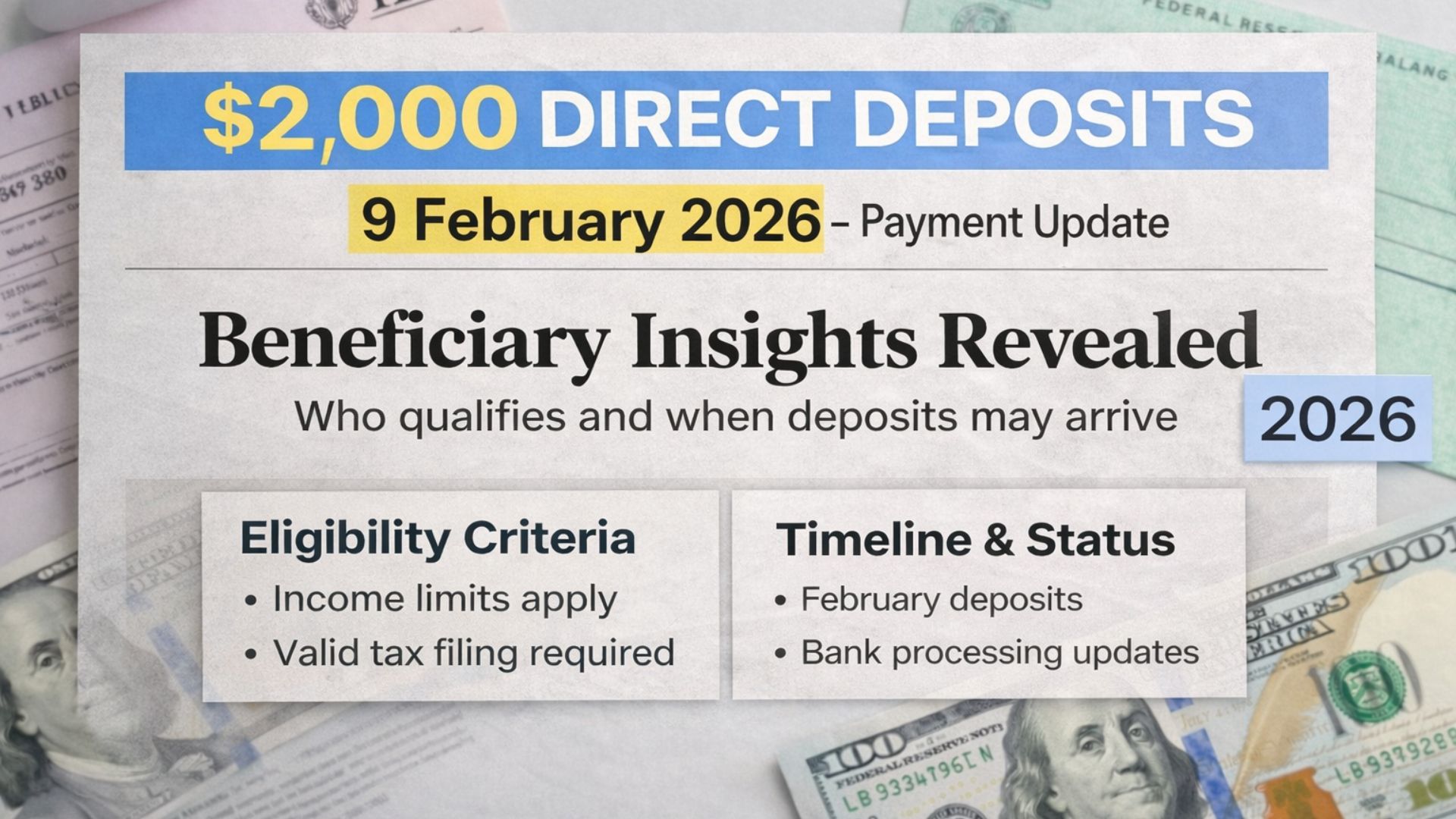
As February 2026 gets closer, many Americans are hearing repeated claims about a possible $2,000 direct deposit from the federal government. These claims are spreading quickly on social media, in forwarded messages, and through unofficial news posts. For families already dealing with high prices for food, rent, utilities, and healthcare, the idea of a $2,000 payment feels hopeful. At the same time, the mixed information has created confusion and uncertainty. Understanding what is confirmed and what is still only discussion is important to avoid false expectations.
What the $2,000 Direct Deposit Discussion Really Means
The talk around a $2,000 direct deposit is connected to broader discussions about financial relief and economic pressure in the United States. In the past, the government issued stimulus payments during major economic emergencies. Because of that history, any mention of a round figure like $2,000 quickly attracts attention. However, as of early 2026, there is no officially approved universal $2,000 payment. No law has been passed by Congress, and no payment schedule has been released by the Treasury or IRS.
Why People Are Seeing $2,000 Figures
Many people are seeing deposits close to $2,000 for reasons that are not related to a new stimulus. Tax refunds for the 2025 tax year can reach this amount when refundable credits are included. Credits such as the Earned Income Tax Credit or certain versions of the Child Tax Credit can significantly increase refund totals. These are not free payments but refunds based on tax rules and eligibility.

Some Social Security, SSI, SSDI, or VA beneficiaries may also see totals near $2,000 when regular benefits, adjustments, or corrections overlap in the same month. This can make it appear as if a new payment has been issued when it is actually a combination of existing benefits.
Who Could Receive Payments If Approved
If a $2,000 direct deposit were approved in the future, eligibility would likely depend on income, filing status, residency, and benefit enrollment. Past programs often included income limits and phased out higher earners. Final rules would come directly from Congress and federal agencies, not from online posts.
How Payments Would Be Sent
If any such payment becomes law, the government would most likely use existing IRS and Social Security records. Direct deposit would be the fastest method. People without updated banking details could receive paper checks, which usually take longer.
Staying Safe From Misinformation
Scammers often use payment rumors to trick people into sharing personal information. Federal agencies do not ask for bank details through emails, texts, or social media messages. Only official government websites should be trusted for updates.
Current Status and What You Should Do
At this time, the $2,000 direct deposit for February 2026 is not confirmed. There is no action required. Keeping tax filings current and ensuring your banking details are accurate is the best preparation for any future programs.
Disclaimer
This article is for informational purposes only and does not provide financial, legal, or tax advice. As of February 2026, no universal $2,000 federal direct deposit has been approved or scheduled. Eligibility rules, payment amounts, and timelines may change if legislation is passed. Readers should rely only on official government sources such as the IRS or Social Security Administration for accurate and up-to-date information.