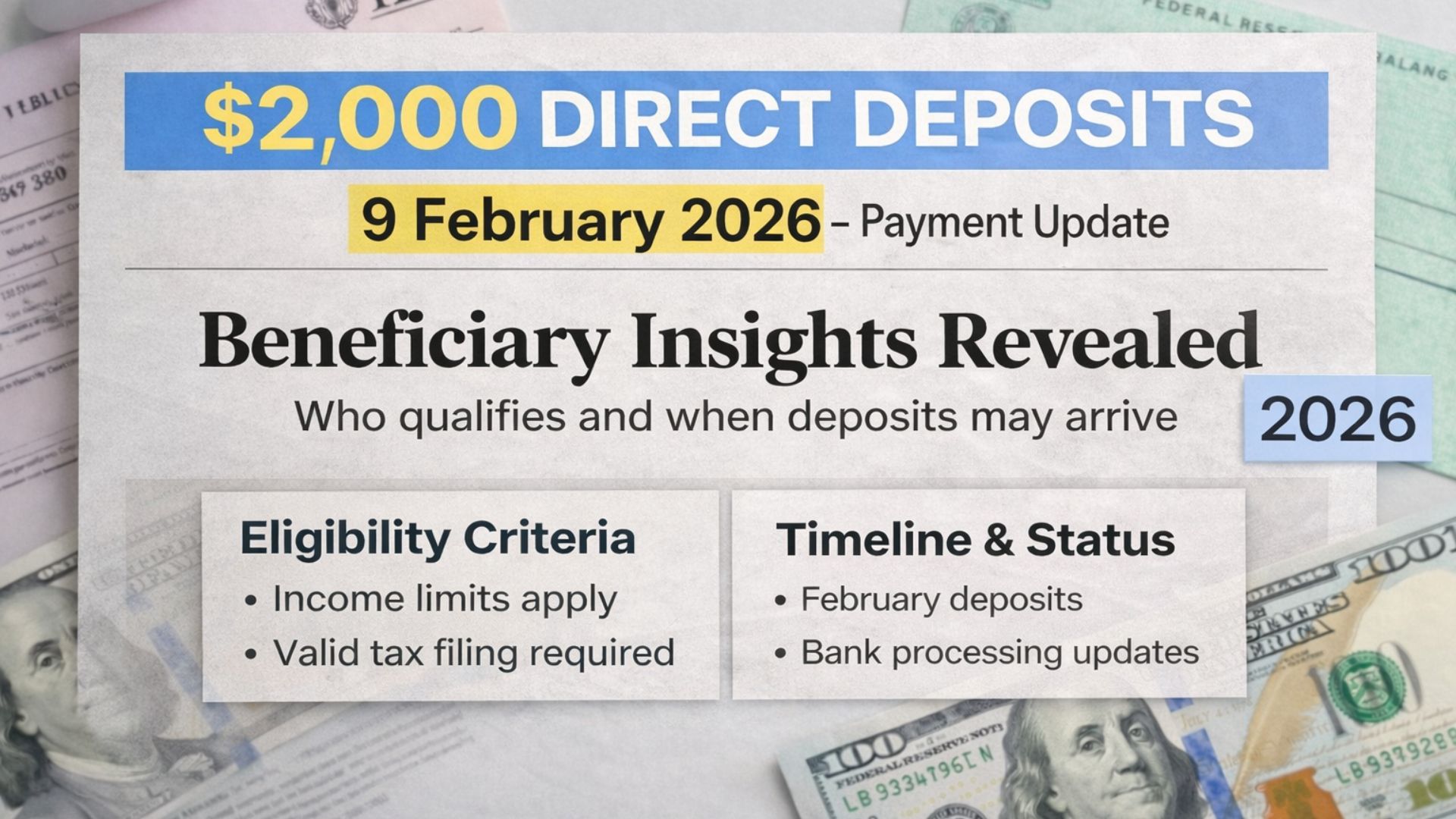
As January 2026 begins, many Americans are hearing discussions about a possible $2,000 federal deposit. With the cost of living continuing to rise, including higher prices for rent, groceries, and medical care, this topic has gained attention. For many households facing financial pressure, the idea of receiving a large federal payment brings hope. However, it is important to clearly understand what this deposit actually refers to and avoid confusion.
Why People Are Talking About a $2,000 Payment
The $2,000 amount being discussed is not linked to a new nationwide stimulus program. Instead, it usually comes from existing federal benefits or refunds. In many cases, these deposits are the result of cost-of-living adjustments, delayed payments, or corrections in federal benefit programs. When multiple payments or adjustments are combined, the total amount can reach close to $2,000. This often leads to misunderstanding, with people assuming a new federal relief program has been approved.

Federal Programs That May Generate Higher Payments
Several federal programs can lead to payments near this amount. Social Security recipients may receive increased payments due to annual cost-of-living adjustments. SSI and SSDI beneficiaries may see retroactive or corrected payments if their benefits were updated late. Veterans receiving VA benefits may also get back pay or adjusted amounts. Additionally, some taxpayers may receive federal tax refunds that include refundable tax credits, which can raise the total refund value.
Who May Be Eligible and When Payments Arrive
Eligibility depends entirely on the program involved. Seniors, disabled individuals, veterans, and low-income families are more likely to receive payments in this range. Payment timing varies, with direct deposits usually arriving faster than paper checks. Delays do not always indicate a problem and often result from standard processing schedules used by federal agencies.
How to Stay Prepared and Avoid Misinformation
To avoid missing any payments, individuals should keep their personal information updated with the relevant agencies. Filing tax returns on time and ensuring correct banking details can help prevent delays. It is important to rely only on official government websites for accurate information. Claims made on social media or through unsolicited messages promising guaranteed payments should be treated with caution.

Managing the Money Carefully
If someone does receive a payment close to $2,000, it is best used for essential needs such as housing, utilities, healthcare, or paying down debt. Financial experts recommend viewing such payments as short-term support rather than ongoing income, and careful budgeting can help stretch the benefit further.
Disclaimer

This article is for informational purposes only and does not provide financial, tax, or legal advice. No universal $2,000 federal deposit has been officially approved for January 2026. Payment amounts, eligibility, and timing depend on individual circumstances and specific federal program rules. Readers should verify details through official government sources or consult qualified professionals for personalized guidance.